Workshops
Saturday 15 May 2027 (tentative): proposed parallel hands-on workshops within the conference theme.
How the workshops work
Saturday morning, 15 May 2027 Tentative. About two and a half hours, six workshops running in parallel. Each participant chooses one.
The Saturday workshop is a draft add-on of GEL 100 (about €35), invoiced after registration. See the registration page for all draft prices.
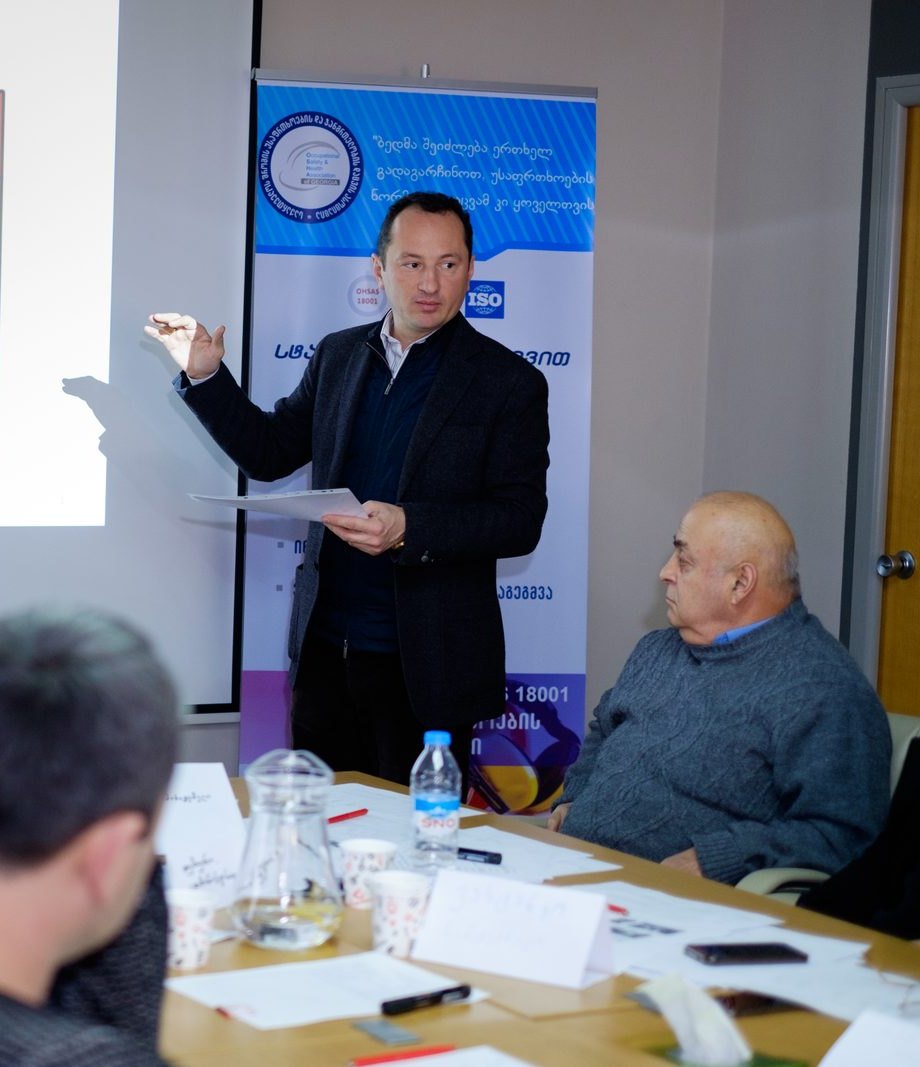
The workshops follow the hands-on method of the workshop “Safe People, Safe Planet”, run at the EfVET Annual Conference 2026 in Brussels: tables work on one real task and look at it from every angle. It is a shared brainstorm, not a showcase. Each table brings its own experience and challenges another table’s work.
- Open: one real workplace task, and one anonymous question to the room.
- Table design: one canvas per table, looking at the worker, the people around, the controls and the evidence.
- Cross-table challenge: swap canvases with another table and write one objection.
- One sentence per table: actor + action + setting + evidence of success.
- Report-back: the same anonymous question again, to see what changed. Participation certificates.
Proposed parallel workshops
A draft selection for discussion. Facilitators will be announced once confirmed.
Saving lives · work at height and contractor control
Take one real construction task and design the controls, from the client to the subcontractor on the scaffold.
- Planning, permits and supervision for work at height
- Contractor and subcontractor control on Georgian sites
- What inspectors look for, and how to fix it
You leave with: a task plan and a short contractor checklist.
Mental health · assessing and managing psychosocial risks
Use the European Healthy Workplaces campaign approach to assess and manage psychosocial risks in one real workplace.
- Workload, harassment and violence, and the link with physical risks
- Simple tools a Georgian employer can use now
- Supporting workers and managers
You leave with: a first action plan for one workplace.
Saving lives · preventing heat illness at work
Build a heat action plan for outdoor and hot indoor work, using the published WHO/WMO guidance on occupational heat.
- Water, rest, shade and acclimatisation
- Who decides to stop work, and when
- Construction, agriculture, logistics and factories
You leave with: a one-page heat plan template.
Culture of prevention · from inspection findings to prevention
A tripartite table of employers, workers and inspectors turns typical inspection findings into practical prevention.
- The most common findings, and their real causes
- Worker participation and safety representatives
- Learning from incidents without blame
You leave with: three agreed actions for one sector.
Culture of prevention · a simple safety routine for SMEs
Risk assessment and a simple safety management routine for a small company that has no safety department.
- Risk assessment in one day
- Training, records and emergency preparedness
- ISO 45001 awareness, through the national standards body
You leave with: a starter toolkit for one small company.
Saving lives · controlling chemical and dust exposure
Map the chemical and dust exposures of one task in mining, construction or industry, and choose controls in the right order.
- Identifying exposures
- The hierarchy of controls
- Health surveillance basics
You leave with: an exposure map and control plan.
More ideas under discussion
Further workshop topics that fit the theme. Suggestions are welcome.
How managers talk about mistakes, near misses and reporting.
Building safety and wellbeing habits into training for young and new workers.
Vehicle movements, loading and fatigue in transport work.
Plans, drills and first response that work on a real site.
Keeping people in work, physically and mentally.
Simple apps, checklists and data for inspections and audits.